A Year of Connection and Joyful Growth
Dear HEAL Community,
This is only the second of these letters I’ve written (also, I’ve been here two years already!? 🤯) and it’s already become one of my favorite parts of the year. It’s like putting together a scrapbook of all my favorite moments and when I click send I feel like a little kid bouncing up and down waiting to show it to you.
I’m excited to tell you about some of our biggest wins and what’s on the horizon, and yes there are “kid letters!” But they’re all the way at the end, so get reading! 😝
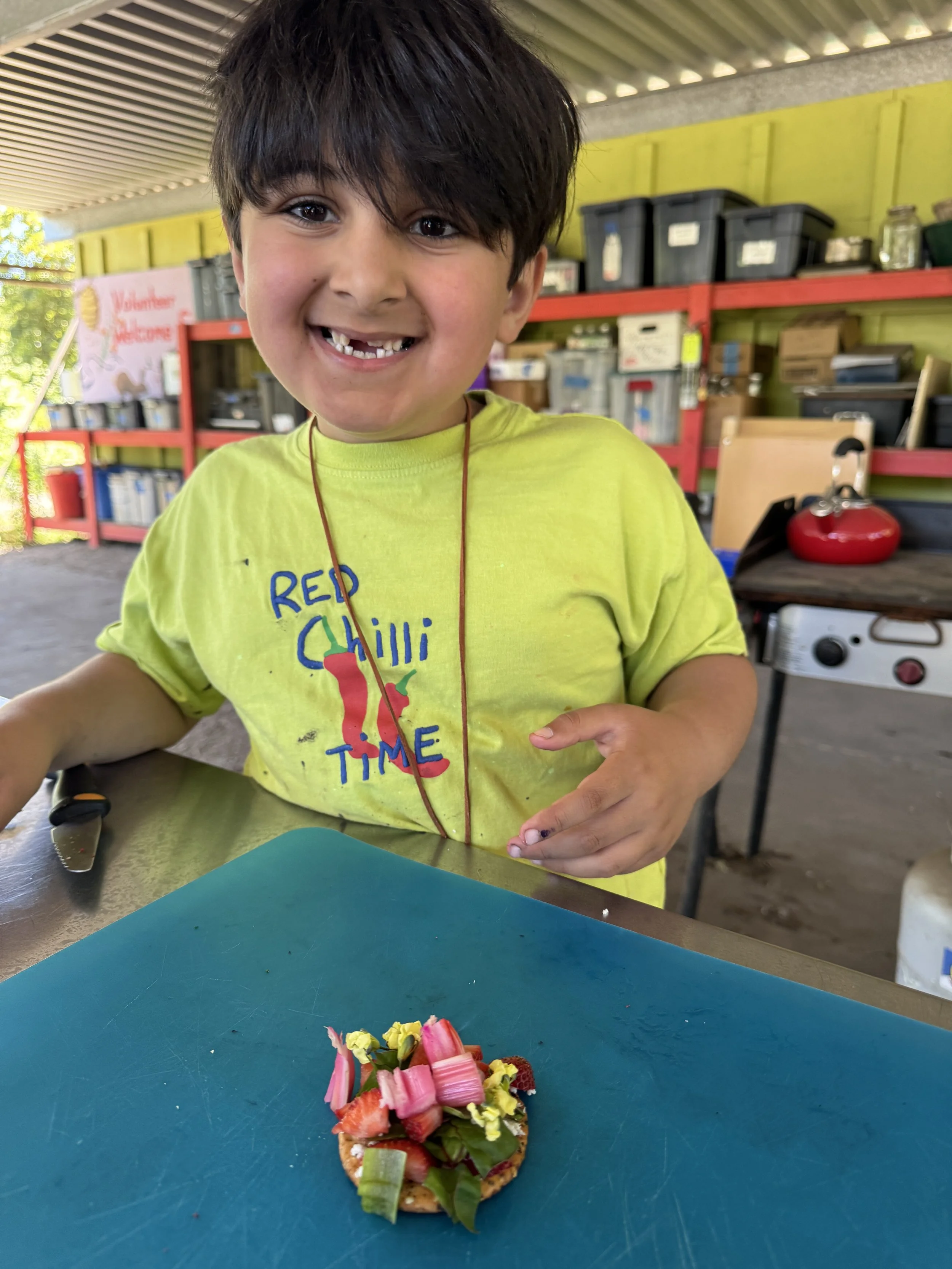
I feel just about as excited as this summer camper, showing off his “Farm on a Cracker,” with veggies he harvested himself. 😁
We’ve got a plan
It may have flown under the radar, but one of the biggest things we did last year was publish a new strategic plan. Hyper simple, super useful, only one page long.
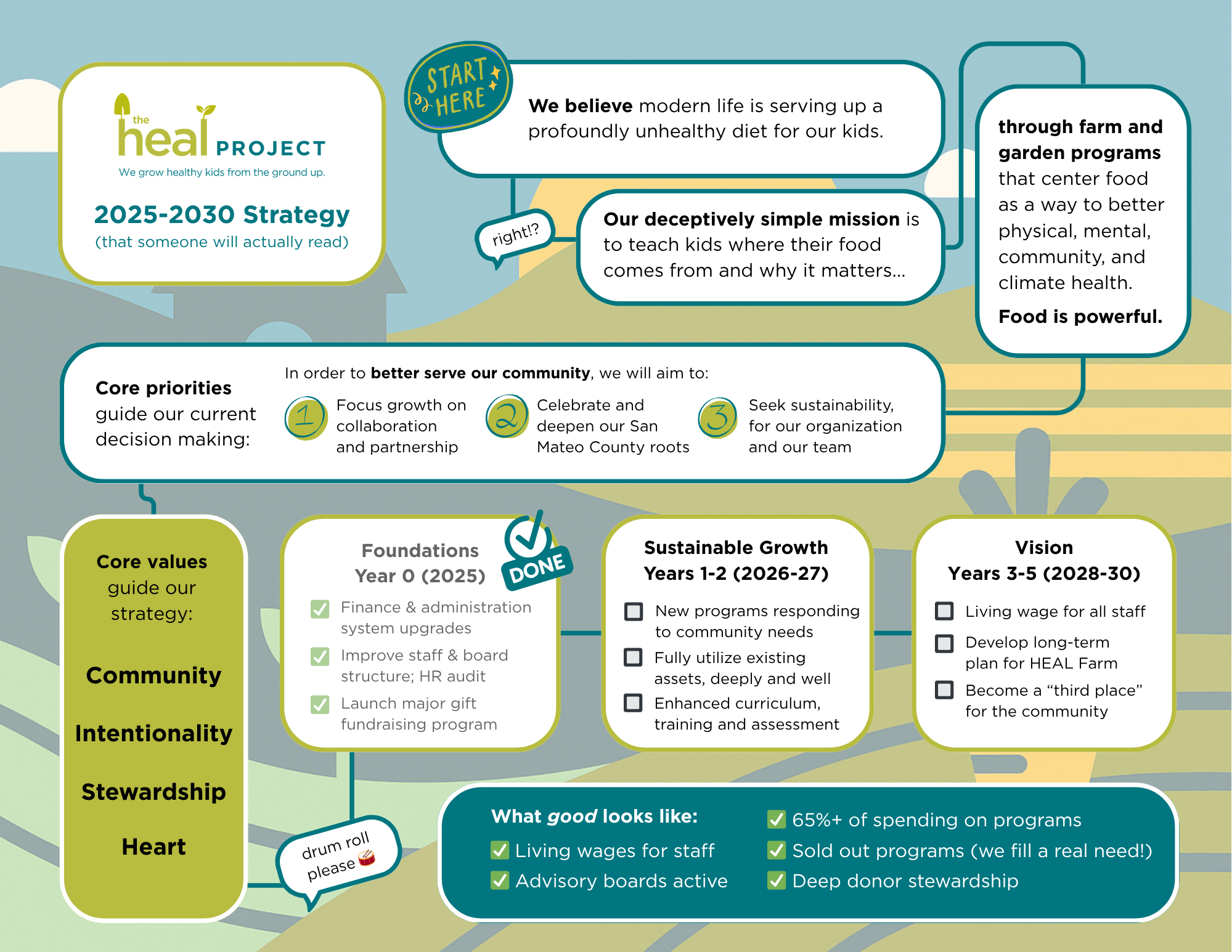
Our Strategic Plan for 2025-2030
We’re squarely in the middle of our “Sustainable Growth” phase, which bridges two fiscal years with a focus on:
New programs responding to community needs
Fully utilizing existing assets, deeply and well
Enhanced curriculum, training, and assessment
We just wrapped up the first of those two fiscal years, and I want to take a moment to look back on the work we’ve done.
In hindsight, something we learned is that all three goals could have been summed up just in the second bullet point, so that’s where I’d like to begin.
Fully utilizing our existing assets, deeply and well
This goal sat closest to our hearts this year. At a time when the social and political climate has often felt chaotic and dispiriting, the only thing each of us can really do every day is look hard at what we have, and ask ourselves what we can do with it.
For HEAL, we identified three areas of focus:
Our 2-acre coastal farm has lots of untapped potential as a space for learning and convening. How can we fill empty hours, welcome new visitors, and find more creative uses that connect people to food and nature?
Our produce is an incredible asset, even more so now as many in our community face mounting food insecurity. How can we make sure the fruits (and vegetables!) of every seed that goes in the ground find their way to the plates of our neighbors?
Our curriculum is award-winning, standards-aligned, and well-tested. How can we share, adapt, and expand what we have to meet the needs of more learners and demonstrate outcomes more effectively?
You see? The other two goals fit right in. This kept us laser-focused for the year, with a clear sense of where we needed to experiment, test, and play.
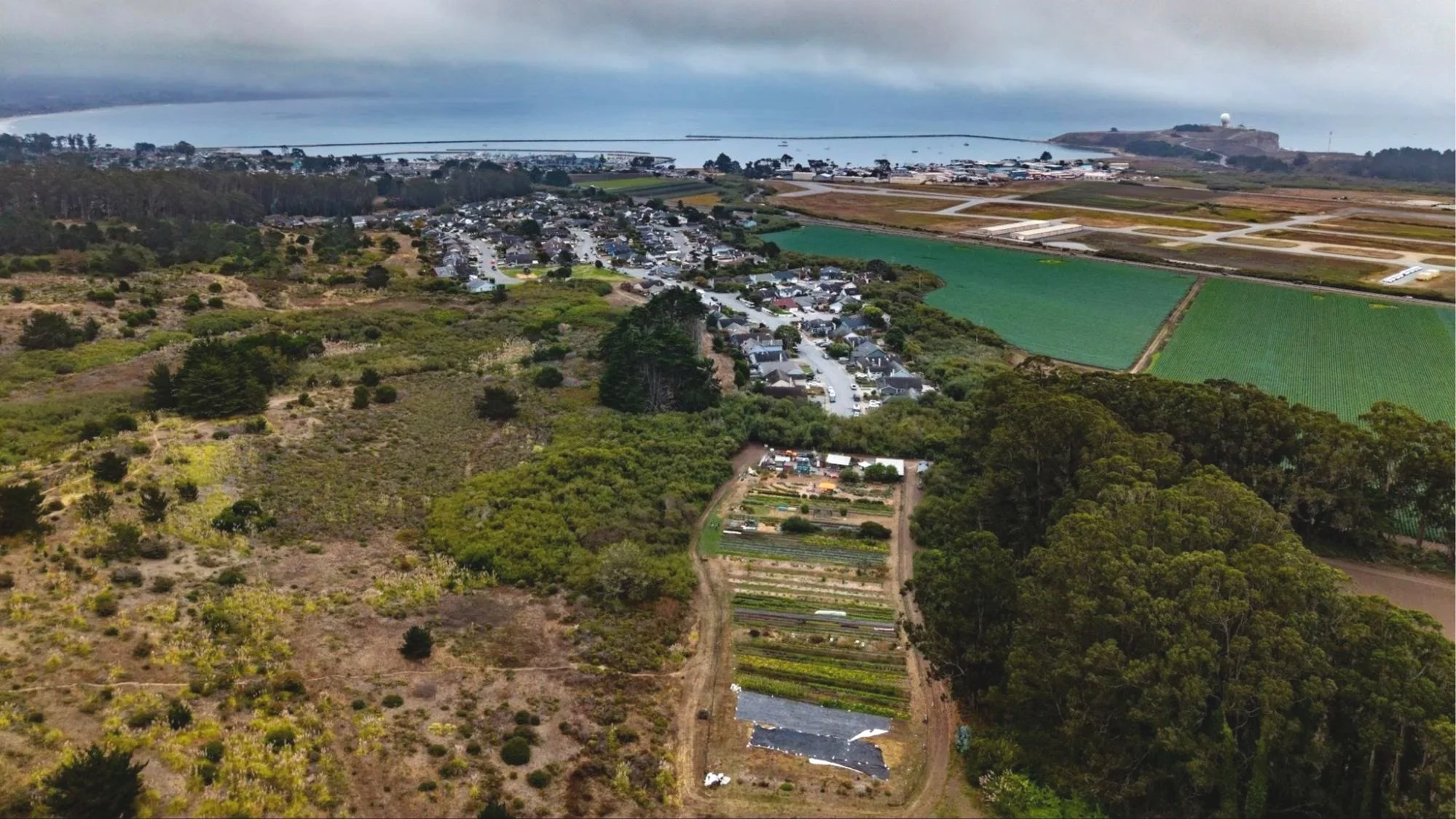
We just got some great new drone photography of the farm, too! Special thanks to Steve Maller for the epic shots! 🙏 📸
The Biggest Wins: Programs
The year was full of pilot programs, community collaborations, and silly experiments. A few were sunset, but some flourished and are now officially part of our work here at HEAL.
On the farm, with the goal of filling time and space with valuable experiences, we:
Completed a year-long installation of an indigenous garden and talking circle with the Muchia Te’ Indigenous Land Trust (MTILT).
Designed and installed by MTILT founder Cata Gomes, the garden is home to over 200 specimens of edible, medicinal, and ceremonial plants used by the Rammaytush Ohlone, and features a ceremonial talking circle - a sacred space for hearing the voices of others. Together with MTILT, we have already welcomed several community groups for ceremonies and talking circles, and are working to integrate the space and indigenous lessons into our field trip program.Launched three new farm programs using existing curriculum in new ways, including an after-school program, Toddler Days, and a year-long Student Farmer program where kids steward a piece of land throughout all the seasons.
Opened our doors to other community groups for convening and learning, including gatherings of mental health practitioners, an event with Grassroots Ecology, and hosting programs with the San Mateo County Master Gardeners.
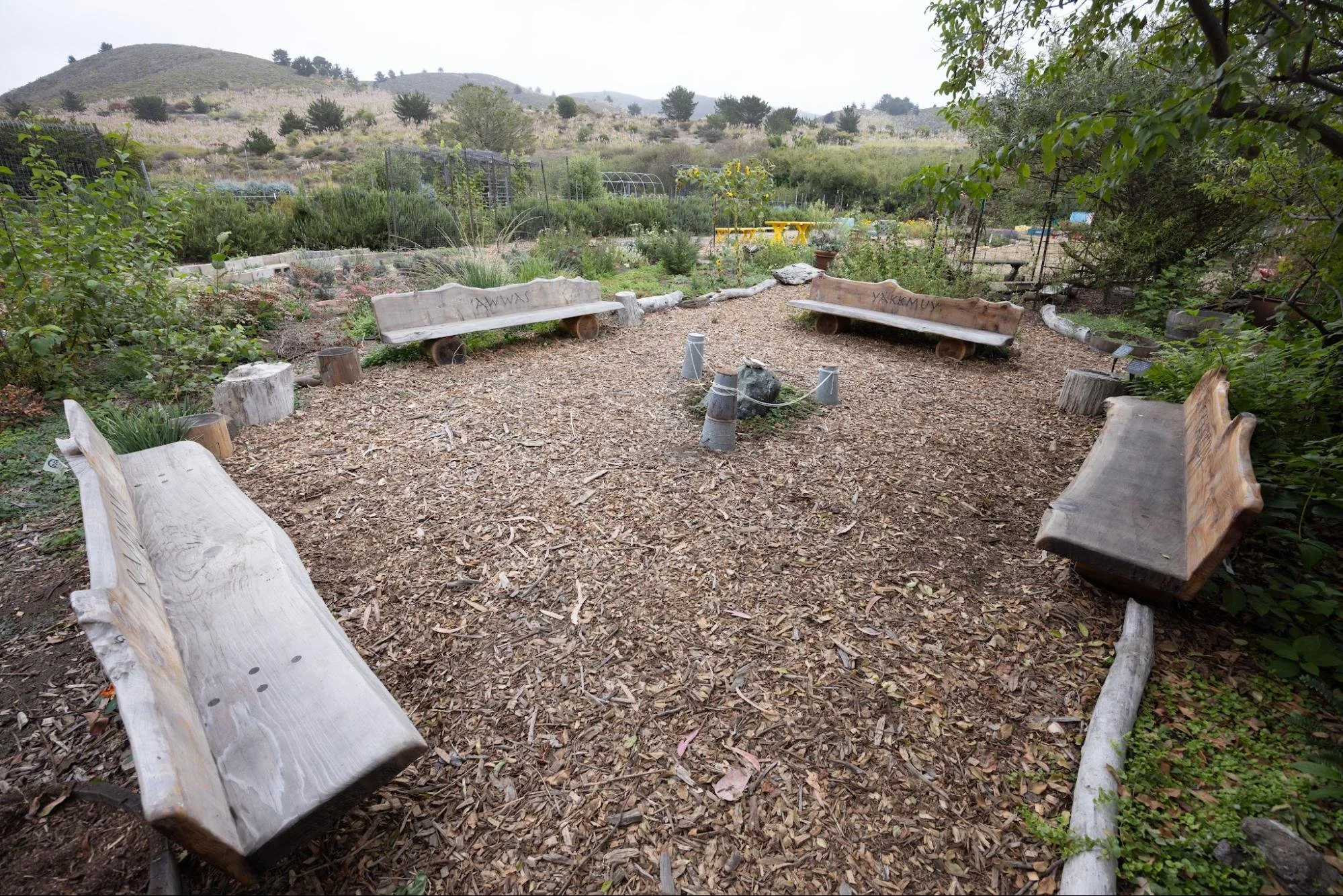
The Indigenous Garden and Talking Circle, anchored by Redwood benches made by local artist Joe Altwer, and hundreds of significant native plant species.
Support the Muchia Te’ Indigenous Land Trust to make more work like this possible.
The Biggest Wins: Produce
When it came to getting our produce in the hands of our community, we doubled down with six new partnerships for donations and distribution.
Two are worthy of their own stories:
Every Thursday in Half Moon Bay, Table of Plenty hosts a community dinner for 150 of our community members who “hunger for more than just food.” The chef-cooked, plated meals are served on white tablecloths and the air just vibrates with community and care. HEAL now provides a weekly free pop-up market with our organically grown, local produce at every ToP dinner during the growing season.
About a year ago, we learned from a connection at Senior Coastsiders that a group of local Asian seniors were getting bussed over the hill to San Mateo every week to get culturally relevant produce. “What? Why not grow it right here?” we thought. We took requests, built a crop list, and now host an Asian Heritage Garden on our farm, with regular free distribution through our partners at the senior center.
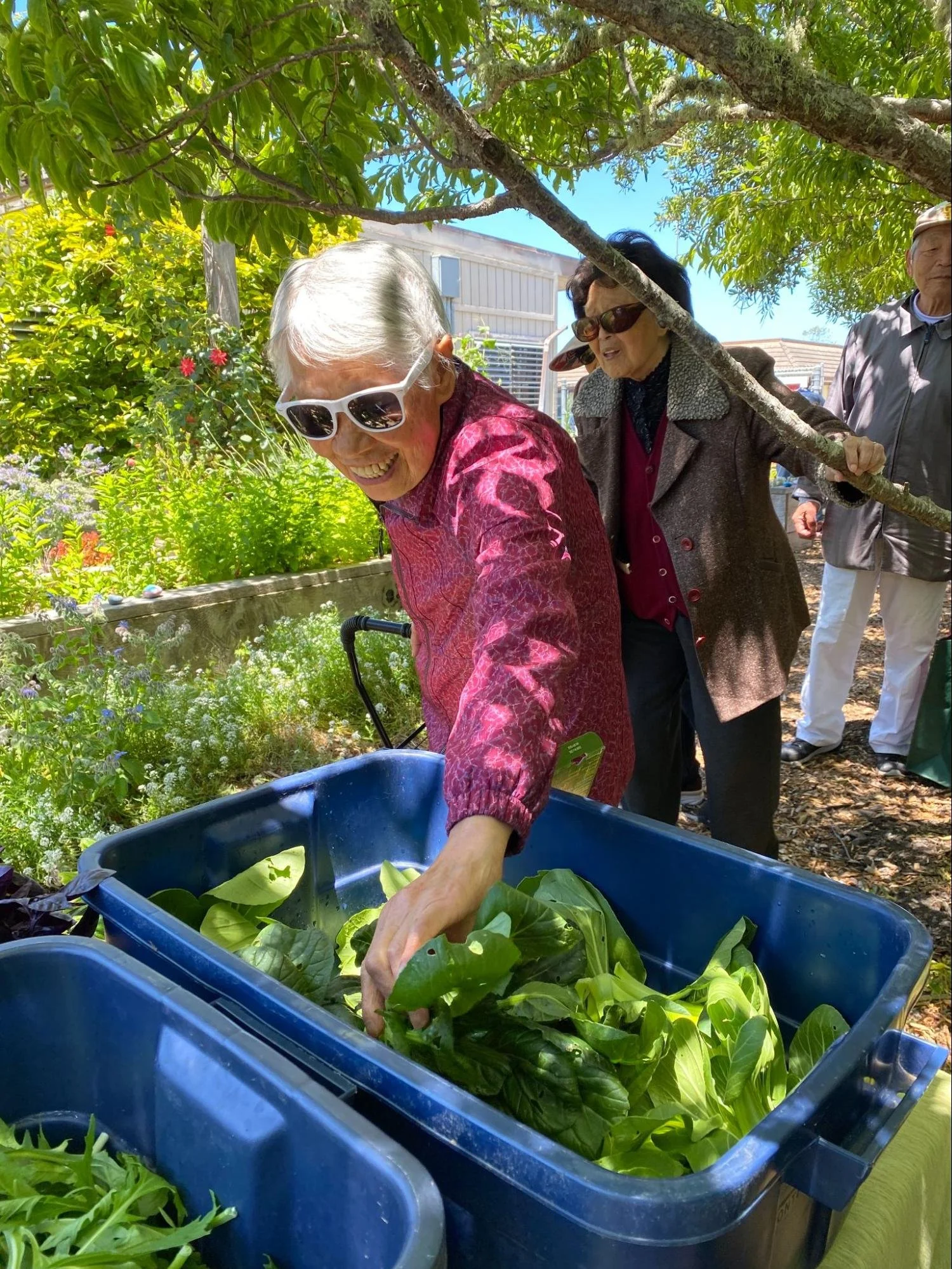
Local residents pick up culturally relevant produce grown in our Asian Heritage Garden, in partnership with Senior Coastsiders.
The Biggest Wins: Curriculum
Finally, we've been working to evolve our programs to meet community needs. We’ve:
expanded field trips to align with curriculum for TK-12th grade
built a second garden program model for schools with shorter time periods to allocate to outdoor learning
begun a program focused on sensory experiences and self-guided nature exploration for a local school serving students with autism.
But the coolest project we’ve worked on in this area is a pilot program we launched last year with Westborough Middle School in South San Francisco and just expanded to all SSFUSD middle schools for fall.
Seeds to Simmer is a semester-long learning experience that weaves together science, social studies, math, English, and climate studies, as students compare industrial and regenerative agriculture to learn about everything from energy cycles to food miles and how to create more climate friendly recipes. In the capstone of last year’s pilot, students created their own soup recipes and cooked them for their entire class, comparing the carbon footprint of their products with what you could buy at the store.
This fall, we’ll be welcoming 570 SSFUSD students to the farm as they learn where their food comes from and why it matters, in a totally new way. Learn more here.
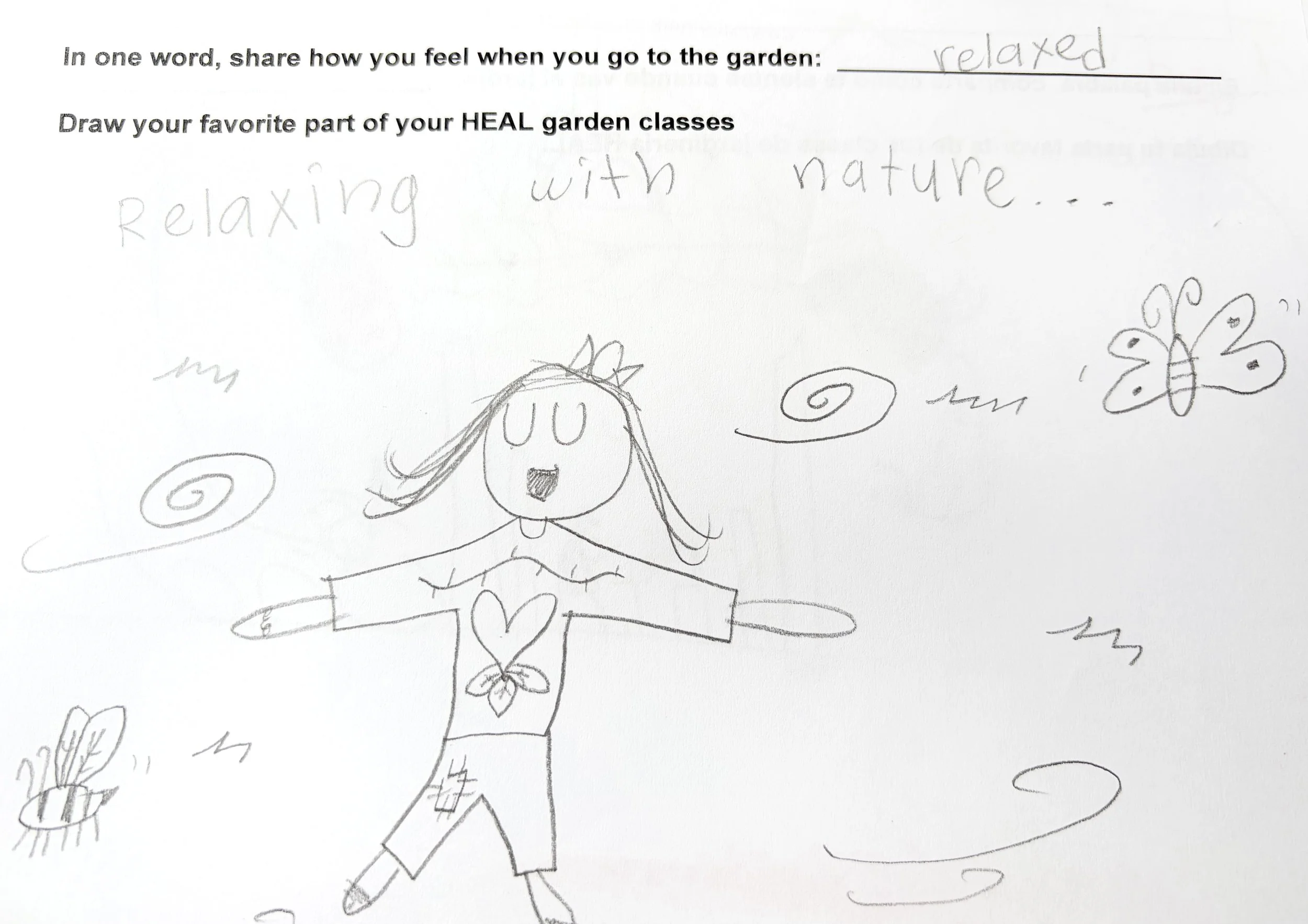
From our survey of Garden Program students. Gardens and time in nature have a huge impact on mental health, and kids need that now more than ever. 🧘🏼 🌱
What’s On Deck
We’re so excited about the progress we made this year with sustainable growth, as well as toward our goal of a living wage for our full team (we closed the gap by 50%!).
But there’s still work to be done. For the second half of this phase, we plan to focus on:
Ensuring our expanded programs, produce distribution, and farm experiences are sustainable. This means tightening up operations, staffing, pricing models, and more as we codify and fully integrate what we’ve done.
Continuing to explore ways we can help combat food insecurity in our community, through funding partnerships and other distribution avenues.
Leveling up our metrics is part of this too: assessing impact on students, validating learning outcomes, and communicating stories. We’re just digging in on this with a few partners, and are pretty excited about what’s to come!
That’s a Wrap
Those are the stories. Want to see the stats? Check out our FY 25-26 Impact Report and (new this year!) our Organizational Health Report. As always, drop us a line if you want to learn more or support our work. Oh, and one more kid letter, as promised, below. 😉
Thank you for being part of our mission.
🫶🏼
Brett
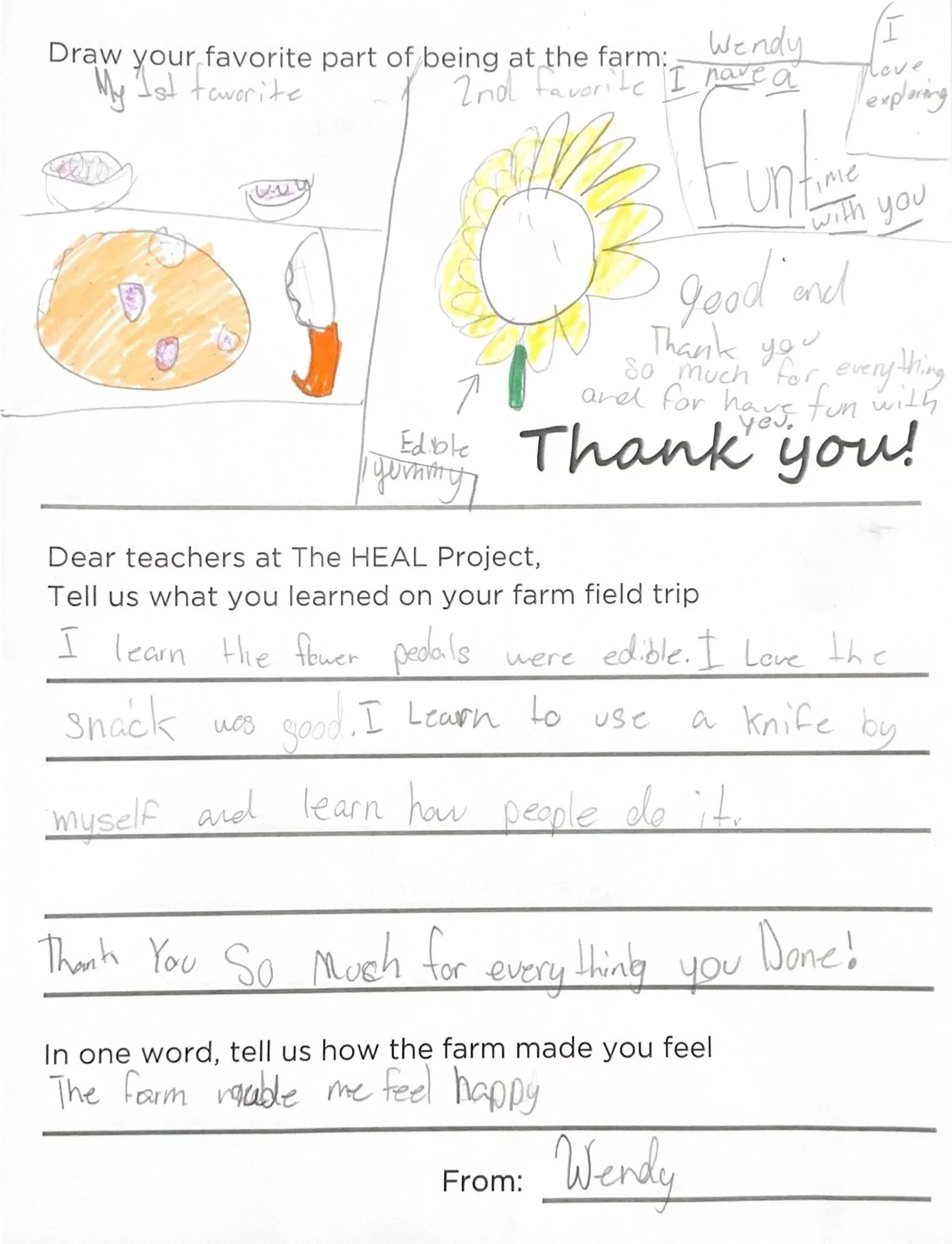
The literal best part of our jobs: getting thank you letters from the kids in our farm and garden programs. The farm makes us feel happy too, Wendy! 😎