From Seeds to Simmer: Bringing Food Systems to Life
What happens when students don’t just learn about food systems, but…
GROW food
MEET a farmer
COMPARE farming practices
HARVEST ingredients
COOK a meal,
AND redesign a recipe with the health of the planet in mind?
Together with the 7th-grade teaching team at Westborough Middle School in South San Francisco, The HEAL Project piloted a cross-curricular food systems program designed to bring the school’s science curriculum to life through hands-on, real-world experiences.
The goal was to move learning beyond the classroom and give students opportunities to apply concepts about energy, agriculture, nutrition, and environmental impact to the food choices they encounter every day.
The pilot engaged 140 seventh-grade students and connected classroom instruction, school garden experimentation, a visit to The HEAL Project Farm, cooking, data analysis, persuasive communication, and a culminating student project.
At the heart of the program was one simple challenge…
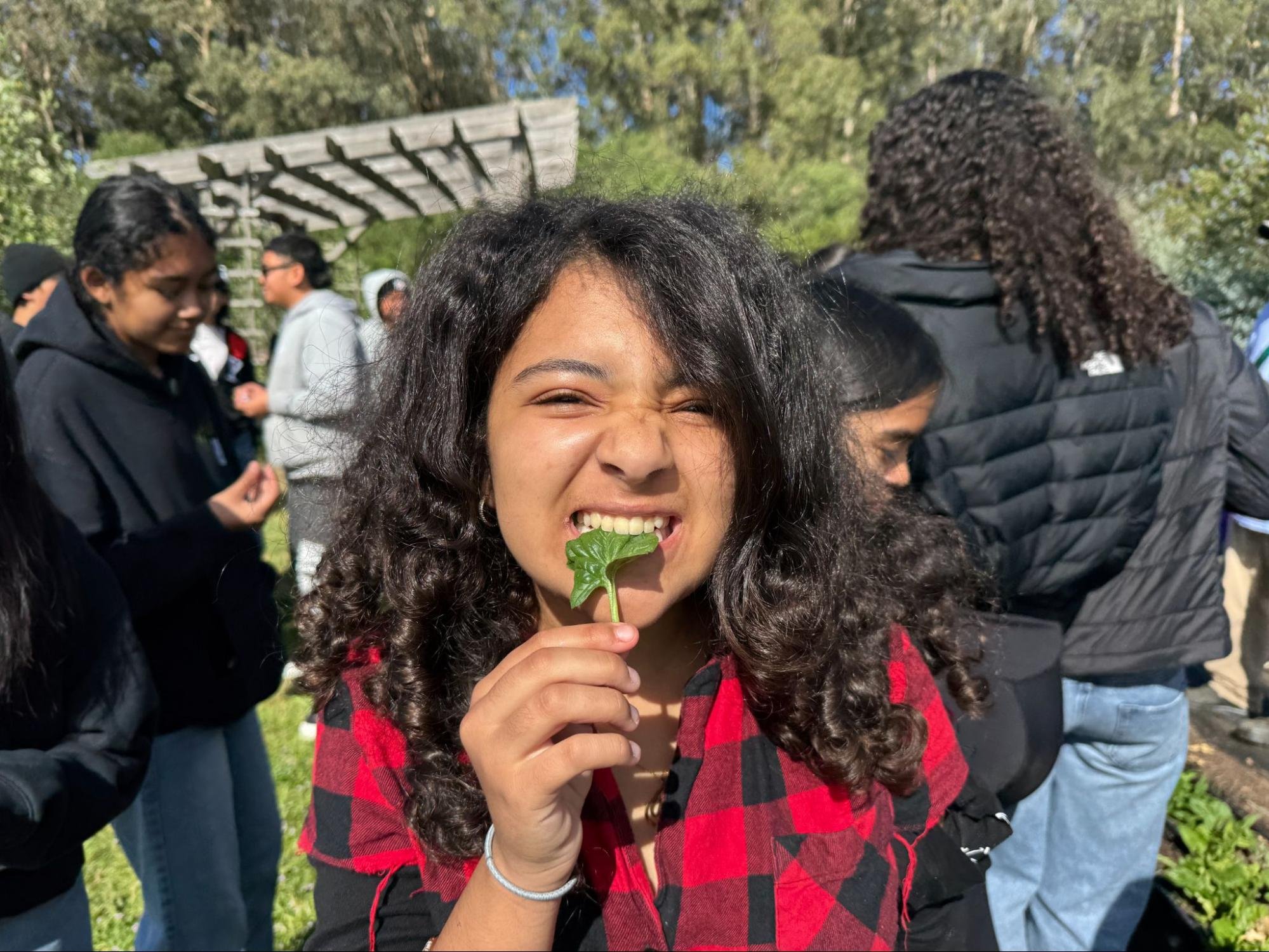
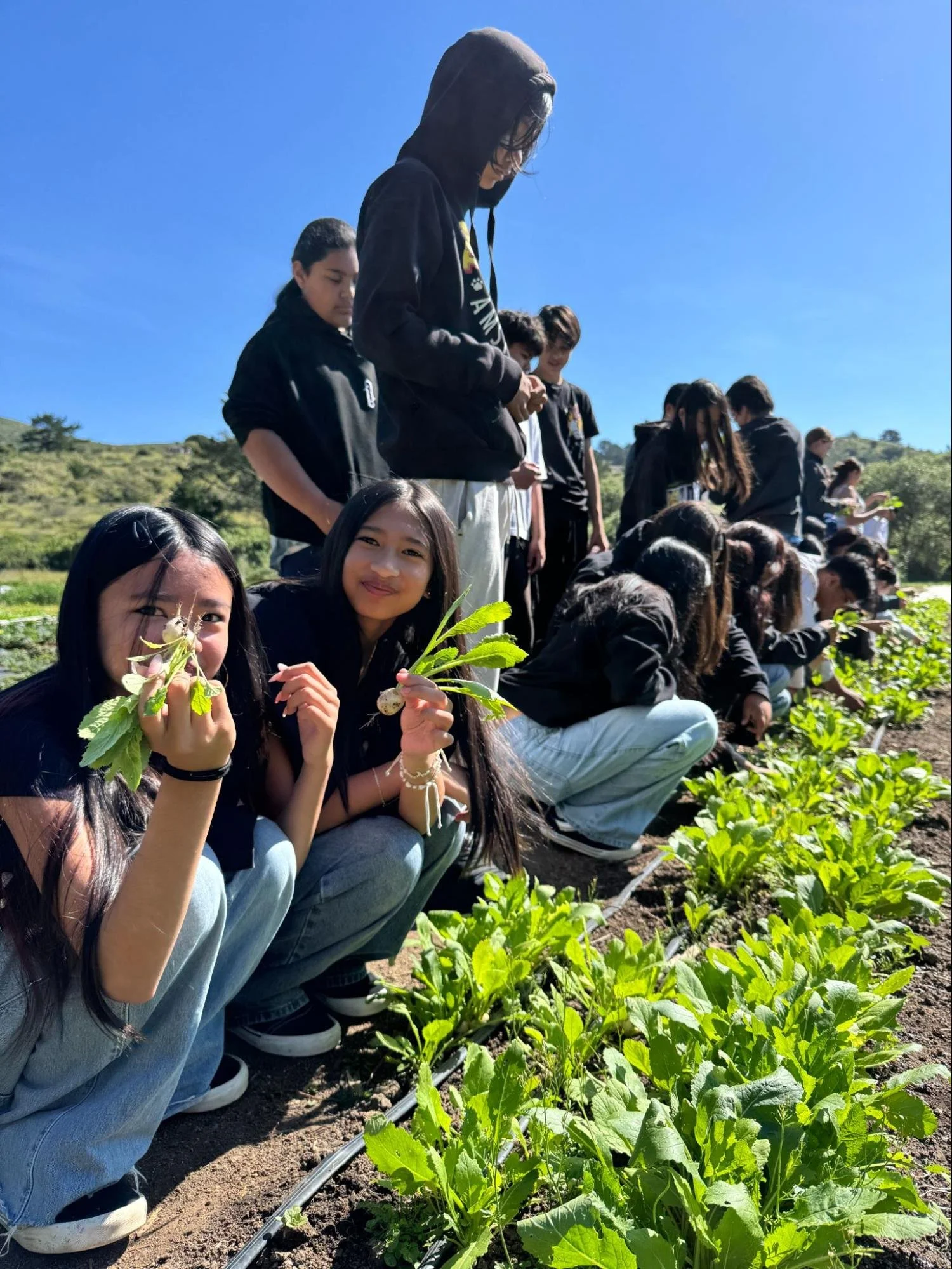
A Westborough Middle School student showing just how exciting fresh greens can be!
Can we create a delicious soup that is healthy for both people and the planet?
The result was a learning experience in which science was not an isolated subject. Students drew on systems thinking, scientific inquiry, data analysis, collaboration, and communication to explore a real-world question.
Answering the question required students to think across disciplines:
In Science, they explored energy flow, the cycling of matter, and the environmental impacts of food production.
Math gave students tools to calculate and compare costs and carbon emissions.
Social Studies opened questions about how geography, climate, and trade influence our food system.
And English Language Arts helped students communicate their ideas through evidence-based persuasive writing.
And, it was tasty. 🥕
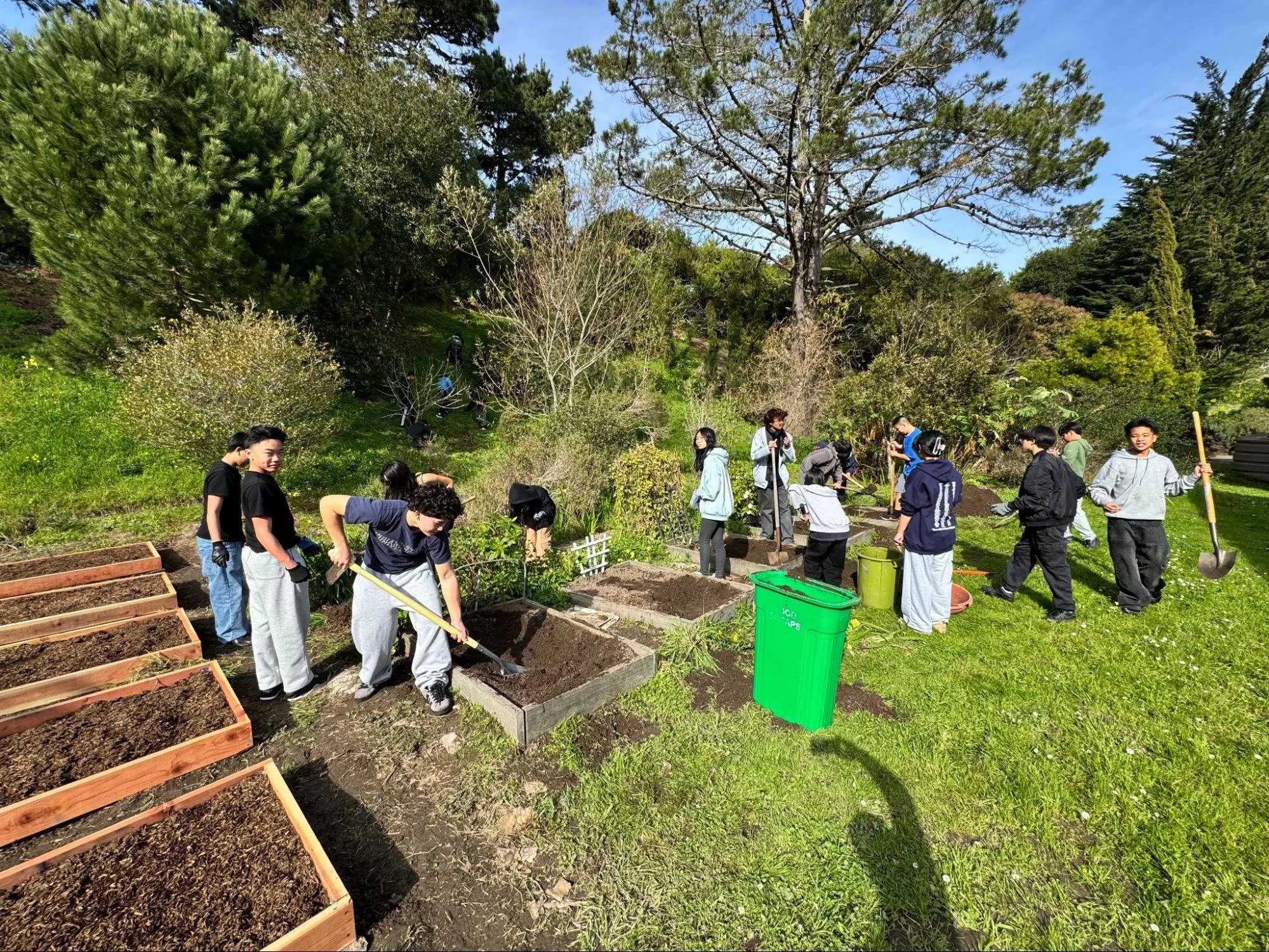
From Classroom to Garden to Farm
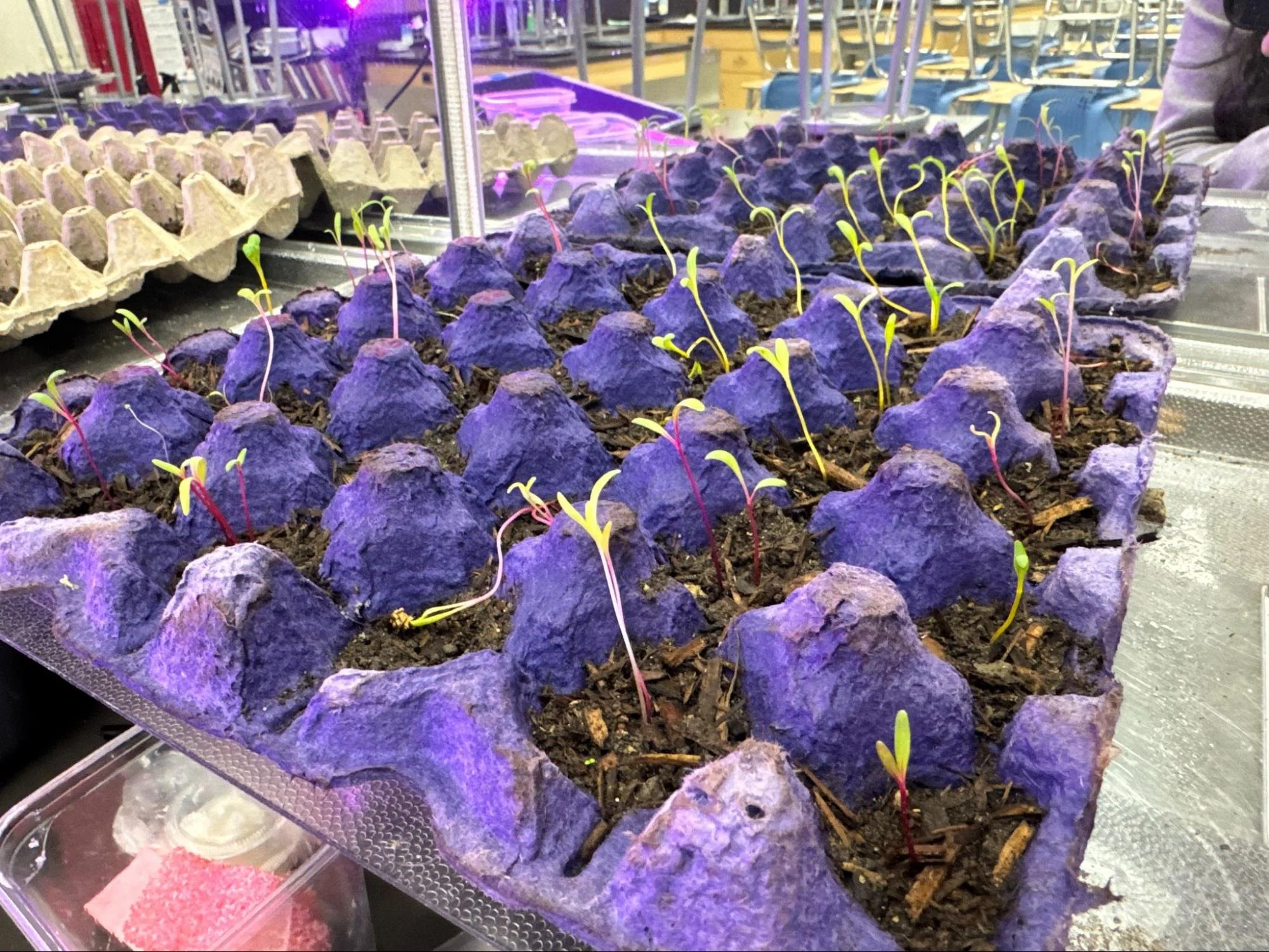
The program began at Westborough, where students germinated seeds before transplanting and caring for the seedlings in the school garden. Along the way, they explored scientific concepts like germination, growth rate, crop yield, and plant survival.
Then it was time to see agriculture on a larger scale.
Over two days, all 140 students visited The HEAL Project Farm in El Granada for a hands-on exploration of food production and sustainable agriculture. Students:
harvested vegetables
tasted produce
talked with a farmer
explored regenerative growing techniques
and considered topics ranging from food miles to living wages.
One experience stood out in the feedback: seeing regenerative and industrial agriculture side by side.
From the farm, students could observe two very different approaches to growing food in the same landscape. Instead of encountering concepts such as soil health and regenerative agriculture only through diagrams or readings, students could see the differences in front of them. Students were especially fascinated by Farmer Natasha’s use of a broadfork, which provided a tangible contrast to the tractors and other machinery used in larger-scale agriculture.
Teachers told us that this comparison helped make complex environmental concepts tangible and memorable. Students continued discussing what they had seen after returning to school.
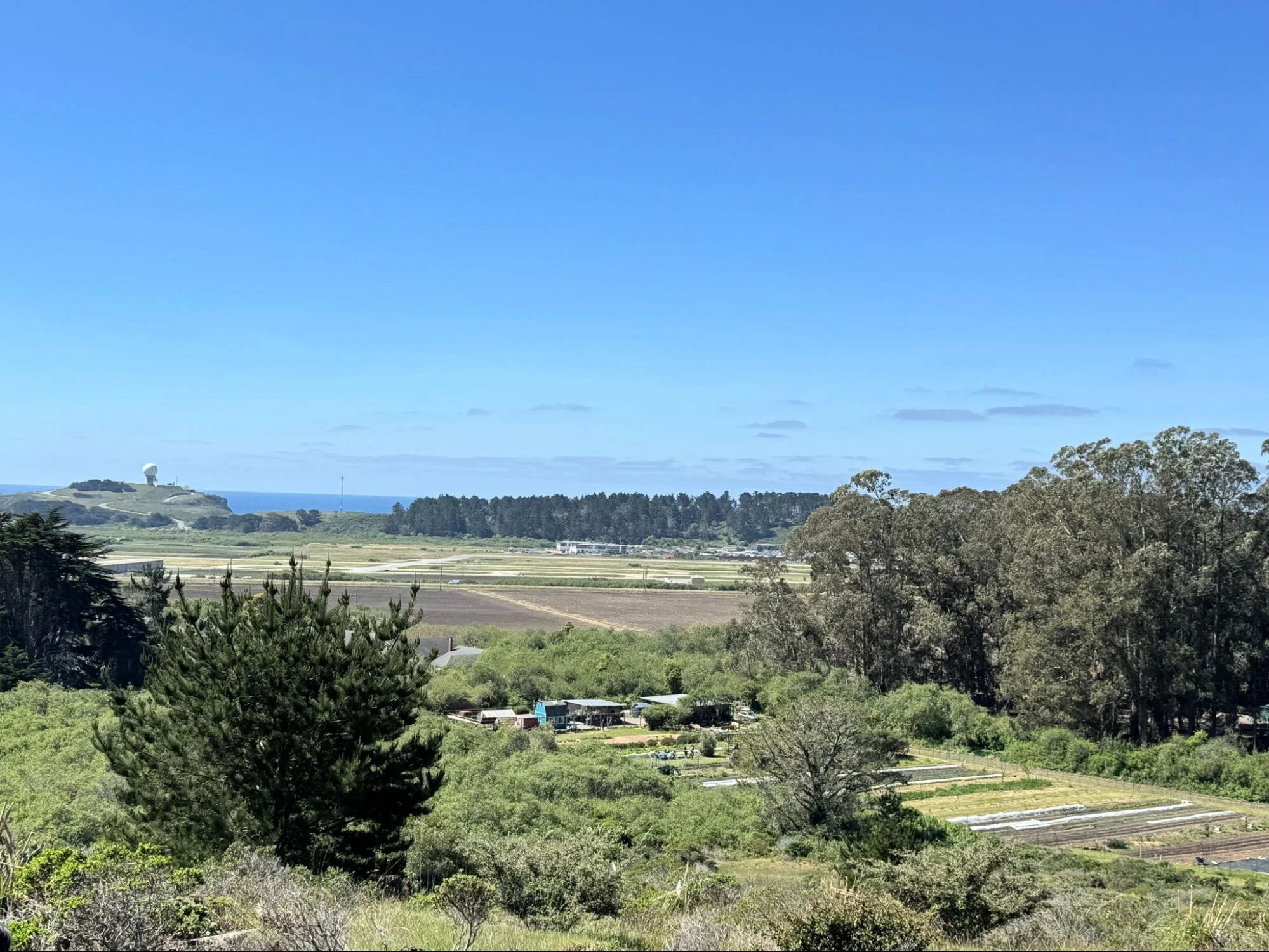
A view from the hillside by The HEAL Farm (foreground), where students discussed regenerative farming techniques and compared and contrasted The HEAL Farm with surrounding industrial farms they could see.
“Being able to compare the two approaches in real time helped me better understand the differences in how food can be produced.””
Taste Became Another Way to Learn
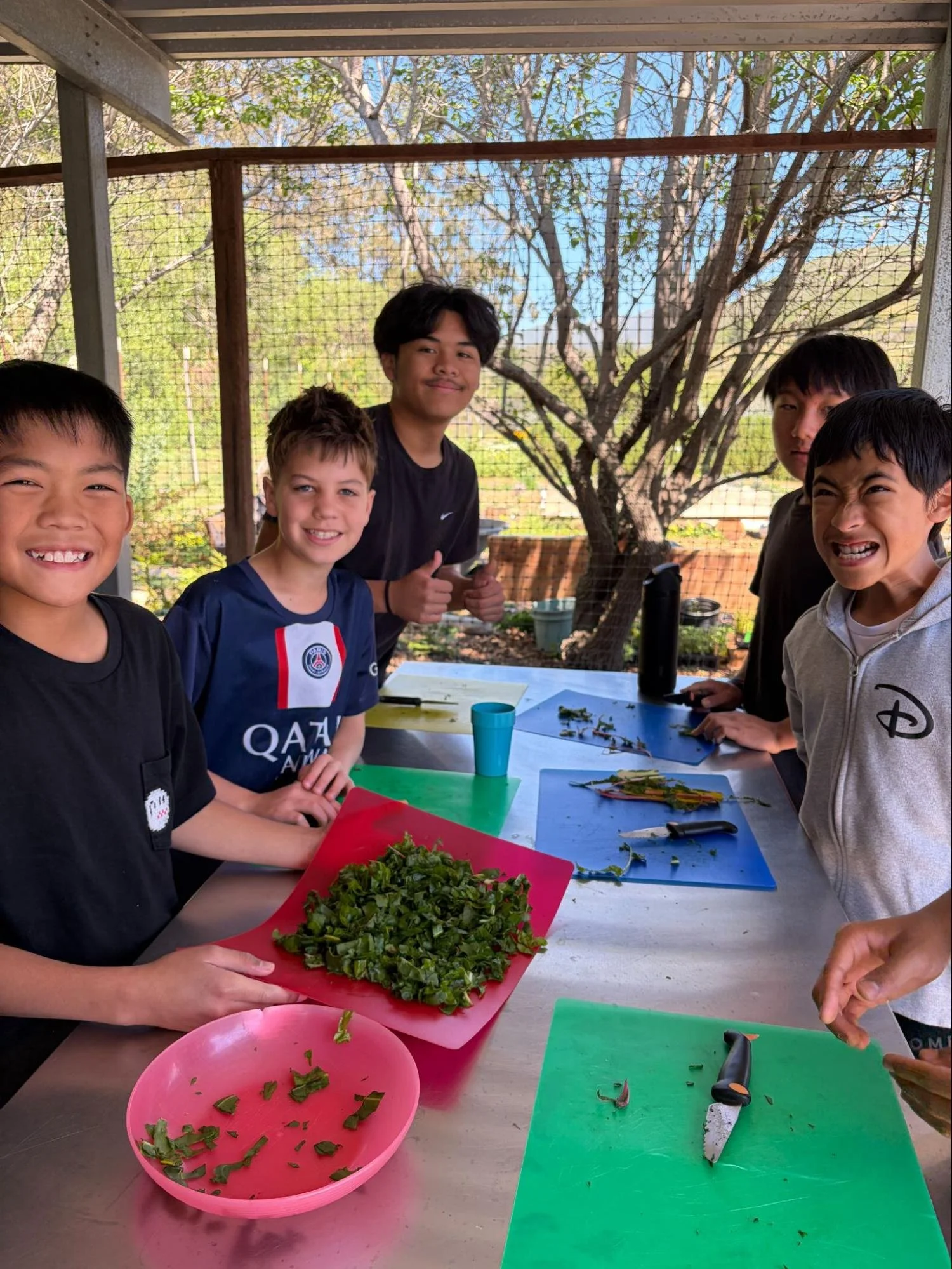
The farm experience was intentionally sensory. Students rubbed and smelled herbs, sampled edible flowers and vegetables, conducted a farm-fresh versus store-bought strawberry taste test, harvested produce, and learned how to prepare soup.
Those experiences proved to be much more than fun additions to the day. Teachers reported that students continued discussing the strawberry comparison back at school. Some students tried vegetables they normally avoided and discovered that they liked them. Food also opened unexpected opportunities for students to connect the program to their own families and cultures, particularly through conversations about different soup traditions.
One student who described himself as not being a big fan of vegetables surprised himself, commenting “I really liked the soup because the farm vegetables had a nice flavor.”
Sometimes changing a young person’s relationship with food begins not with telling them what they should eat, but by allowing them to grow, harvest, prepare, and taste it themselves.
Turning Experience Into Action
The farm visit wasn’t the end of the learning.
Back at school, student teams selected soup recipes and used a spreadsheet-based design process to examine their environmental footprint. They identified ingredients and preparation methods associated with higher carbon emissions, researched alternatives, and considered how sourcing, production, transportation, cooking, and food-waste disposal could affect the sustainability of a meal.
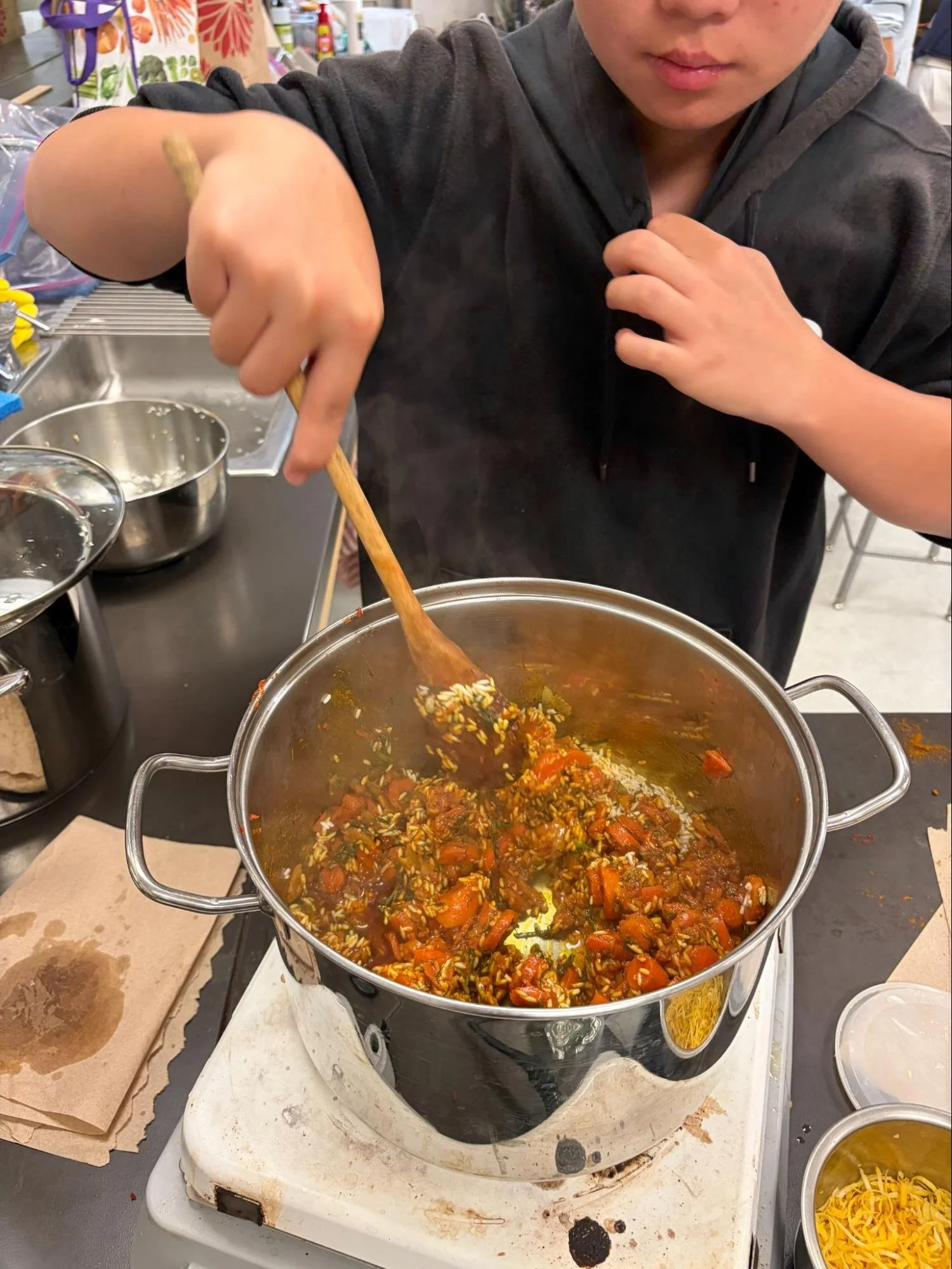
Then they redesigned their recipes and cooked their lower-carbon soups.
For the culminating activity, students became marketers as well as scientists. Teams developed names and branding for their soups, created persuasive pitches, highlighted nutrition and sustainability, explained how their choices reduced carbon emissions, and produced infomercials to convince their peers to try their creations. Students then evaluated one another’s soups and presentations.
Students weren’t simply being asked, What did you learn? They had an opportunity to apply what they learned to something tangible, collaborative, and connected to their everyday lives.
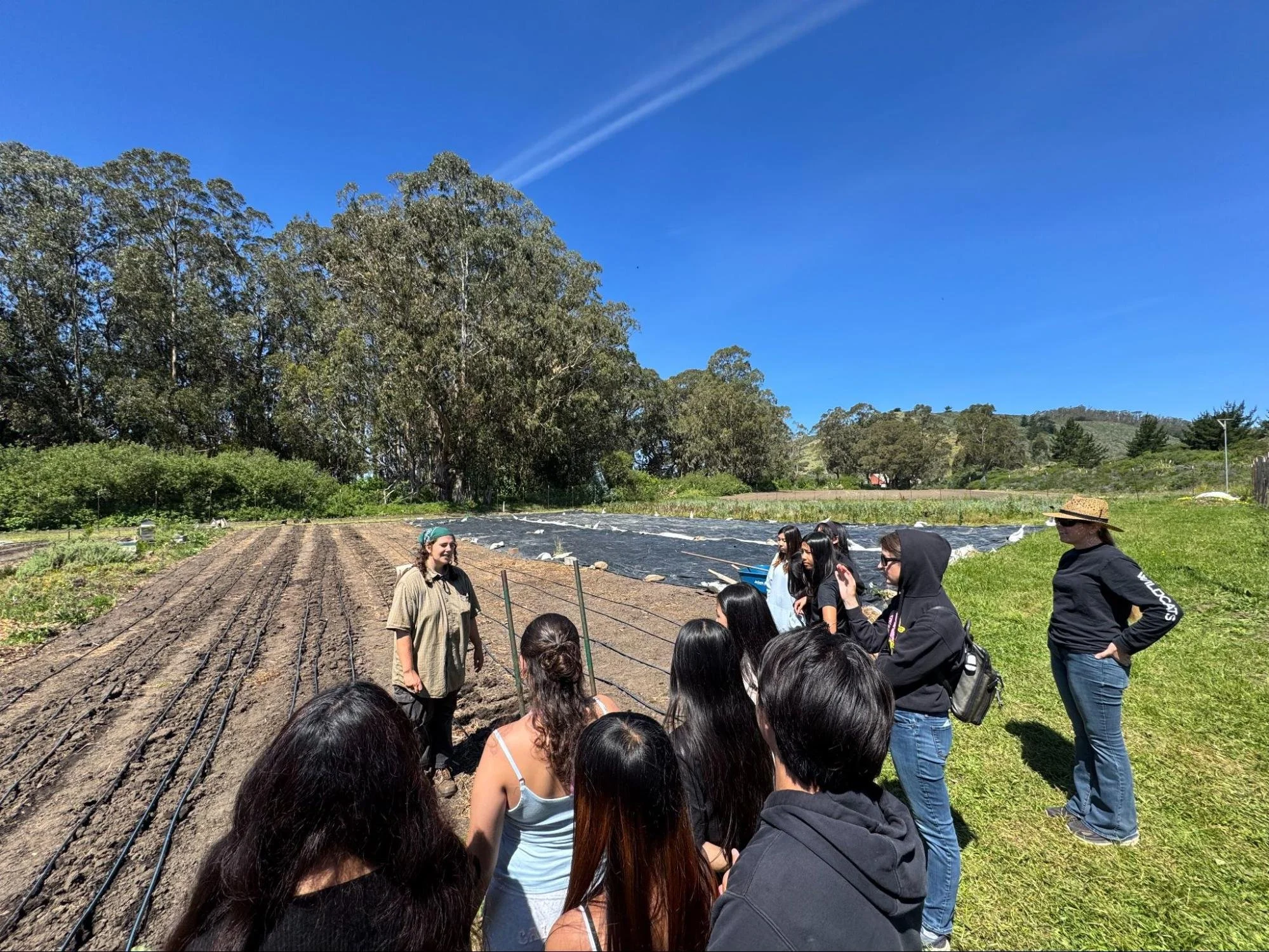
Students meet with Farmer Natasha (and her broadfork!) at The HEAL Farm.
What Worked
Feedback from both students and educators was overwhelmingly positive, and several elements emerged as particularly powerful.
The side-by-side farm comparison made abstract sustainability concepts visible.
Sensory experiences such as tasting, smelling, harvesting, and cooking kept students actively engaged.
Inquiry-based facilitation encouraged students to move beyond surface-level questions.
The recipe redesign and infomercial activities helped students carry what they experienced at the farm back into their classroom learning.
The pilot also demonstrated the potential of food as an interdisciplinary teaching tool. A single bowl of soup became a way to explore ecology, agriculture, carbon emissions, proportional reasoning, economics, culture, persuasive writing, nutrition, and communication.
Perhaps most importantly, students began connecting classroom concepts to the food system surrounding them. Their reflections showed them thinking about transportation, water use, soil health, machinery, regenerative agriculture, and the environmental consequences of everyday food choices.
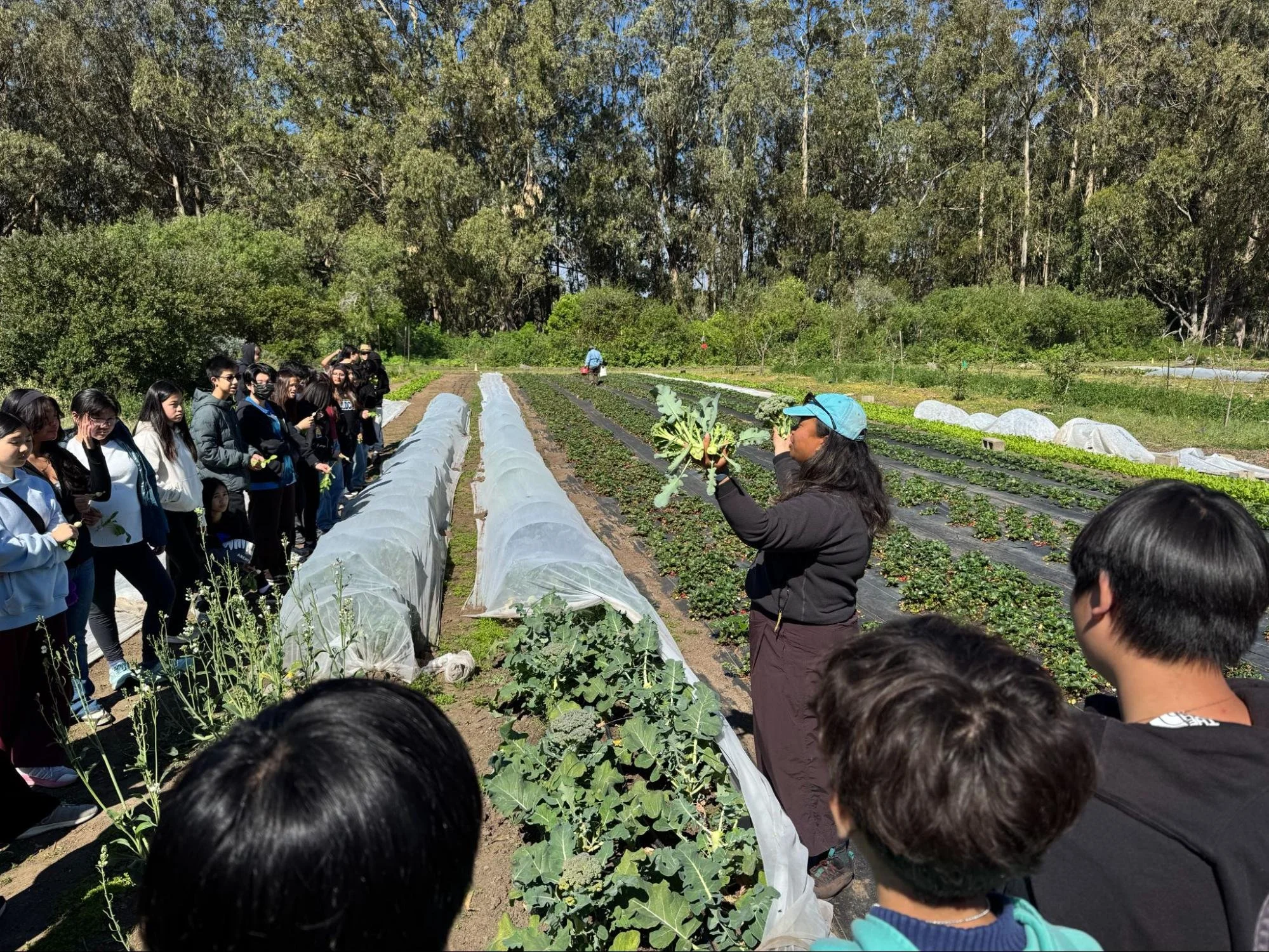
HEAL educator Terilyn Wong leads an exploration of our cruciferous crops.
What We Learned
As a pilot, this program was designed not only to test what works, but also to help us imagine what’s possible.
Feedback from students and educators highlighted opportunities to deepen the experience through stronger connections between classroom, garden, farm, and community-based learning; expanded interdisciplinary collaboration; and even more opportunities for students to investigate the environmental and social dimensions of our food system.
These learnings are helping us refine the program into a model that can grow and evolve, while keeping hands-on, place-based learning at its center.
Interested in exploring this type of learning at your school?